Web design and development agency for mid-sized companies

We design and build custom websites in Next.js for companies with 10 to 500 staff. Every page ships as server-rendered HTML that Google and AI crawlers can read without running JavaScript.

Timeline
8 to 16 weeks
Price from
$18,000
Built with
Next.js, React, TypeScript
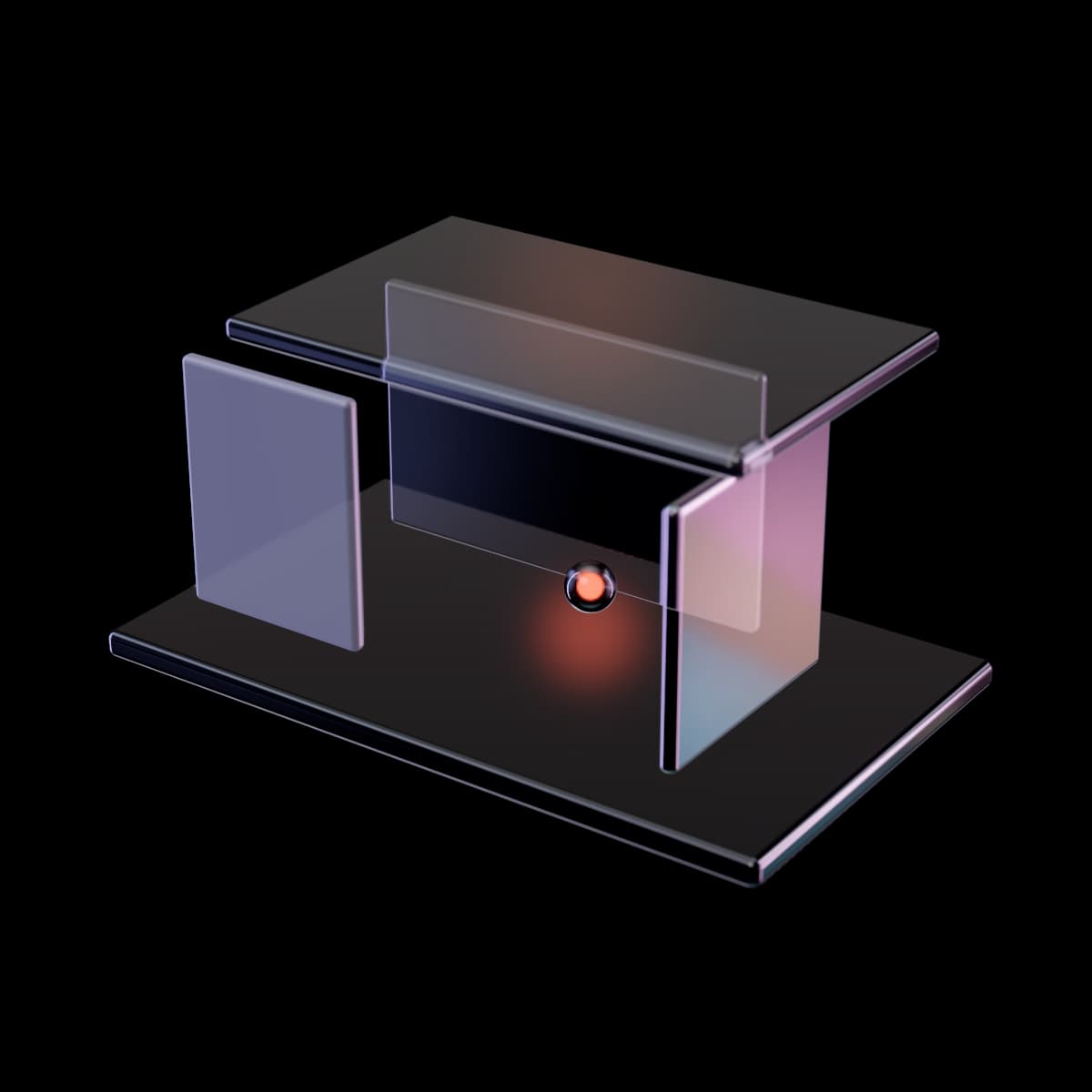
A small glass pavilion like an architect's model, with a clear base slab, three wall panes at right angles (one frosted, one iridescent and one clear), a thin clear roof floating just above them and a glowing orange bead resting inside.
Part of Web platforms2 services in this practice

In short

Web design and development at The Method Crew means a custom marketing website, designed in Figma and built in Next.js with a headless CMS your team edits. We handle site structure, design, build, content migration, redirects and launch. Most sites take 8 to 16 weeks and cost $18,000 to $45,000; sites with custom 3D or WebGL work run $35,000 to $80,000.

Updated

Who it is for

  • Companies with 10 to 500 staff whose site no longer matches what they sell
  • Marketing teams on an aging WordPress theme with a plugin stack nobody wants to touch
  • B2B firms that need service pages to rank on Google and be quoted in AI answers
  • Brands that want one considered 3D or motion moment without a slow page

Signals you need it

  • Every change waits for a developer

    Updating a price, a bio or a service description takes a ticket and a week, because the CMS was set up for the agency that built it.

  • Search Console reports poor Core Web Vitals

    Mobile pages fail on load time or responsiveness, usually from a heavy theme, oversized images and third-party scripts added over the years.

  • Sales answers questions the site should

    Prospects ask what you do, what it costs and how long it takes because the site never says. AI search tools look for the same answers and find nothing to quote.

  • The site describes the company you used to be

    New services hide on one catch-all page, retired ones are still in the menu, and the design no longer matches the sales deck.

What we hand over

Everything here is yours: the code, the content, the tracking and the accounts it all runs on.

Sitemap and content model
Every page and template listed, with the CMS fields each one needs and the person on your side who writes it.
Redirect map
A spreadsheet pairing each old URL with its new one, built from a full crawl and 16 months of Search Console data, then deployed as permanent redirects.
Figma design system
Type scale, color tokens, spacing, components and every page template at mobile and desktop widths.
Next.js codebase
TypeScript, prerendered pages, structured data, sitemap and robots rules, kept in your GitHub organization and deployed to your hosting account.
Headless CMS
Sanity or Payload configured with editor roles, page previews and a recorded training session.
Launch report
Core Web Vitals and Lighthouse results per template, an accessibility check against WCAG 2.2 AA, validated schema and the analytics events in place.

How the engagement runs

During the build
A demo of working software every week
At handover
Documentation, a runbook and training for your team
  1. Stage 11 to 2 weeks

    Map

    We crawl the current site, export Search Console and analytics data, and interview sales and marketing about what buyers ask before they call. You get the sitemap, content model and a draft redirect map, which confirm the scope of the build.

  2. Stage 22 to 3 weeks

    Prove

    Design direction on 2 real templates, usually the home page and a service page, written with real copy. We code both on a preview URL so you judge them on your own phone, against a speed budget agreed up front.

  3. Stage 34 to 10 weeks

    Build

    Remaining templates, CMS, content migration, forms and CRM connections, structured data and redirects. You see a demo on the preview URL every week, and launch day follows a written checklist with a rollback plan.

  4. Stage 430 days, then monthly if you want it

    Run

    For 30 days after launch we watch Search Console coverage, 404s, Core Web Vitals and form submissions, and fix what the move broke. After that you run the site from the runbook, or keep us on for upgrades and new templates.

How much does a custom website cost?

A custom website from us costs $18,000 to $80,000. Most marketing sites of 10 to 30 pages land between $18,000 and $45,000. Sites with a custom 3D or WebGL scene run $35,000 to $80,000, because the scene, its fallbacks and its performance testing are a project of their own.

Page count matters less than people expect. Ten service pages that share one template cost far less than 10 pages with different layouts. These are the drivers we price:

DriverLower end of the bandUpper end of the band
Unique templates6 to 8 (home, service, article, about, contact)15 or more, each with its own layout
CopyYou supply final textWe write or rewrite every page
Content migrationUnder 50 URLsSeveral hundred posts, each with a redirect
CMS setupOne editor role, simple fieldsRoles, approvals, scheduled publishing, more than one language
IntegrationsForms to email or one CRMCRM, booking, site search and a listings feed
Motion and 3DCSS transitions and one animated diagramA custom WebGL scene with poster fallbacks

As a reference point, a 12-template site for a professional services firm, with us rewriting the core pages, 60 posts migrated and HubSpot forms, would price at around $30,000 to $38,000.

Hosting, CMS seats and font licenses sit outside the fixed price and are billed to your own accounts at cost, with no markup. Changes after you sign off a stage are billed by the hour and quoted before we start.

Old sitePlanPreviewLive siteRedirects tested on the preview, then live01Crawl the old site16 months of search data02Map every URLSitemap and redirect map03Two real templatesAgainst a speed budget04Build the restCMS, migration, forms05LaunchChecklist, rollback plan06Watch 30 days404s, vitals, formsOld sitePlanPreviewLive site01Crawl the old site16 months of search data02Map every URLSitemap and redirect map03Two real templatesAgainst a speed budget04Build the restCMS, migration, forms05LaunchChecklist, rollback plan06Watch 30 days404s, vitals, forms
How a site rebuild moves from the old site to launchThe old site is crawled and its search data exported, every URL gets a place in the sitemap and the redirect map, 2 real templates are proven on a preview URL before the rest is built there, and launch runs from a checklist, with redirects tested and 30 days of checks after.
  • Exception or feedback path

Why build in Next.js instead of WordPress?

We build in Next.js because every page ships as prerendered HTML and we control every script, font and image that loads. Google's thresholds for a good page are a Largest Contentful Paint within 2.5 seconds, Interaction to Next Paint of 200 milliseconds or less and Cumulative Layout Shift of 0.1 or less, measured at the 75th percentile of visits (web.dev (opens in a new tab)). We use those numbers as the launch budget for each template.

WordPress is still the better choice for some teams. The trade-offs:

Next.js with a headless CMSWordPress with a theme
EditingSanity or Payload, with fields shaped to each templateWordPress admin, often through a page builder
SpeedImages, fonts and scripts controlled in codeDepends on the theme and every plugin added since
UpkeepFramework upgrades a few times a year, done by a developerCore, theme and plugin updates, often monthly
Security patchingA short list of dependencies updated on a scheduleEach plugin is third-party code with its own update cycle
Hiring laterNeeds a React developerLarge pool of WordPress freelancers
Best fitCustom design, strict speed targets, structured contentLarge blogs run by a team that already knows WordPress

If your team runs WordPress well and the real problem is an outdated design, a new theme from a WordPress specialist may cost less than a rebuild with us. We will tell you that on the scoping call.

Will a redesign hurt our existing SEO rankings?

Expect some movement for a few weeks. A lasting drop almost always traces back to missing redirects or pages that vanished in the move. Google's site move guide recommends permanent server-side redirects (301 or 308) from each old URL to its new one, warns of temporary ranking fluctuation, and says a small to medium site can take a few weeks for most pages to move (Google's guide to site moves with URL changes (opens in a new tab)).

Our migration routine:

  1. Crawl the current site with Screaming Frog before design starts, and export 16 months of Search Console data.
  2. List every URL that earns clicks, impressions or backlinks. Those keep their content, even when the layout changes.
  3. Map each old URL to its closest new page. No mass redirects to the home page.
  4. Test the redirect map on the preview site, then again on the live domain within an hour of switching.
  5. Submit the new sitemap, then check Search Console daily for 2 weeks and weekly until day 30.

A rebuild is also the cheapest moment to fix structure. New templates carry Service and BreadcrumbList structured data that matches the visible text, question-style headings with direct answers, and copy that renders without JavaScript. Google says there are no additional requirements to appear in AI Overviews beyond being indexed and eligible for a snippet (Google's AI features guidance (opens in a new tab)), so clean, indexable pages are the work that counts. Our guide to getting cited by ChatGPT, Perplexity and AI Overviews covers the page patterns AI answers quote. If organic search is a main channel for you, pair the rebuild with an SEO and GEO project so content and technical fixes ship together.

Do 3D graphics and animation slow a website down?

They can. Most slow 3D sites load the scene before the words, so the visitor waits while several megabytes of geometry and textures arrive. Built the other way round, a WebGL scene adds very little to the first paint.

Our rules for every 3D or motion build:

  • The H1 text is the Largest Contentful Paint element. The canvas loads after it, through a lazy import of Three.js and React Three Fiber.
  • Rendering pauses when the canvas scrolls out of view, and the device pixel ratio is capped so phones with very dense screens do not render pixels nobody can see.
  • Visitors with reduced motion turned on, or without WebGL, get a static poster image of the scene.
  • One orchestrated moment per page. Fade-ins on every section add script and tell the visitor nothing.
  • Every scene is tested on a mid-range Android phone, not only on a design laptop.

The hero on our own home page follows these rules: the glass forms load after the headline and stop rendering once you scroll past them.

Custom 3D sits in the $35,000 to $80,000 band because modeling, shader work, scroll choreography and fallbacks take time to get right. Before you spend it, ask what the scene explains. A product cutaway, or a shape that shows how your system fits together, justifies the extra weight. An abstract object that says nothing about your business is money better spent on copywriting and photography.

When is a custom website the wrong choice?

When the budget is under $18,000, or the site is 5 pages and a contact form. A good Webflow, Framer or Squarespace template, set up with care, will serve you better than a stripped-down custom build, and your team can run it without us.

Other cases where we will point you elsewhere:

  • You need one page for a campaign or launch. That is a landing page project: $3,000 to $8,000, live in 10 to 15 working days.
  • You sell thousands of products online. Shopify or another commerce platform should run the catalog and checkout. A custom marketing site can sit beside it later.
  • You want a customer-facing app with logins and accounts. We do not build consumer apps.

What a web project does not include:

  • Logo and brand identity design. We work from your existing brand, and if the guidelines are thin we extend them only as far as the site needs.
  • Photography and video shoots. We art-direct and process what you have, or brief a photographer you hire.
  • Paid ads, social media and ongoing content production. We do not sell general digital marketing. If you want a publishing pipeline after launch, see content operations.

What changes for your team

  • Editors publish pages, posts and price changes in the CMS without opening a developer ticket.
  • Old URLs redirect to their matching new pages, so existing links and rankings carry over the move.
  • Every template is tested against the Core Web Vitals thresholds on a mid-range phone before launch.
  • Service pages state scope, price and timeline in server-rendered HTML that search engines and AI crawlers can read.
  • Form leads reach your CRM with the page and campaign that produced them.

Tools we work with

We start from what your team already pays for and add a tool only where nothing you have does the job.

  • Next.js
  • React
  • TypeScript
  • Figma
  • Sanity
  • Payload CMS
  • Vercel
  • Three.js
  • GSAP
  • Google Search Console
  • Google Analytics 4
  • Screaming Frog

What it costs

$18,000 to $80,000per project

Most marketing sites of 10 to 30 pages land between $18,000 and $45,000. Custom 3D or WebGL work puts a site at $35,000 to $80,000.

Change requests
$175 an hour, quoted before work starts

What changes the price

  • Unique templates
  • Copy
  • Content migration
  • CMS setup
  • Integrations
  • Motion and 3D

Common questions

If your question is not here, email the team. We reply within 1 working day.

How long does it take to design and build a website?

Most custom sites take 8 to 16 weeks. Map takes 1 to 2 weeks, design and a coded prototype of the key templates take 2 to 3 weeks, and the full build, content migration and launch take 4 to 10 weeks. The biggest variable is content: sites wait on copy and approvals more often than on code, so the plan sets review dates for both sides.

Can we edit the website ourselves after launch?

Yes. Pages, posts, team bios, FAQs and service details are edited in a headless CMS, usually Sanity or Payload, with fields shaped to each template so editors cannot break the layout. New page types still need a developer. Every editor gets a recorded training session at handover, plus a short written guide to the tasks they do most.

Who owns the website, code and design files?

You do. The code lives in your GitHub organization, the site runs on your hosting account and the CMS is registered in your name from the first week. Figma files, project font licenses and image source files are handed over at launch. If you stop working with us, nothing needs to be migrated or bought back.

Do you write the website copy?

We can, and it is priced into the fixed quote when you want it. On a 20 to 30 page site, copywriting is one of the larger cost drivers. You can write the service detail yourselves and have us write the home page, page structure and calls to action. Either way, copy is drafted before final design so layouts fit real words.

Will the new site be accessible?

We build to WCAG 2.2 level AA: semantic HTML, visible focus states, contrast checked on every color pair, full keyboard navigation, alt text and a reduced-motion path for every animation. We test with axe and by hand with a screen reader before launch. It is a build standard, and does not amount to a legal compliance certificate. For a formal audit we can refer you to a specialist firm.

What happens after the site goes live?

The project includes 30 days of watching Search Console, analytics and error logs, and fixing anything the move broke. After that you can run the site yourselves from the runbook, or keep us on a monthly plan for framework upgrades, fixes and new templates. Search work after launch is a separate SEO and GEO retainer with its own monthly reporting.

Plan a site that loads fast and reads clearly

A 30-minute call about how the work runs today. If this service is the wrong fit, we will say so and point you to the one that is.

Request a 30-minute scoping call

After the call you get a written scope and a fixed price within 5 working days.